Minds IN Order for Therapists
Structured clinical data between sessions — not a recap from memory.
Your clients log daily check-ins and track what's working. When they share their reports with you, you walk into the next session with mood trends, tool effectiveness data, and behavioral patterns, organized and ready to use.
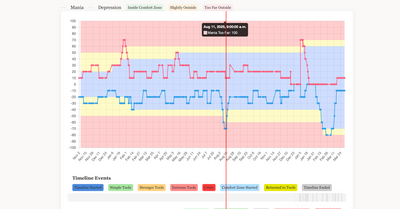
The Doctor/Clinician Report
Everything You Need Before the Next Session
When a client shares their Doctor/Clinician Report with you, you get a structured clinical summary: mood trends, behavioral observations, comfort zone status, tools in use, and what's working — in professional language, not raw check-in entries.
No software to install. No login to manage. Just a secure link to organized data.
How Sharing Works
Client Invites You
Your client invites you by email from inside the app. They assign you the therapist role. Nothing to install, no login to manage.
You See What They Share
You get a secure link to view their selected reports. Read-only access — no admin overhead, no software to set up.
They Control Access
Your client controls 7 independent permission toggles — one for each report type. They can change or revoke access at any time.
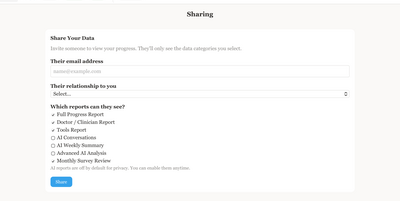
What You Can See
Each client picks exactly which reports to share with you:
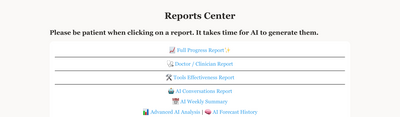
A client might share the Doctor Report and Tools Report with you, but keep AI Conversations private. Or share everything. It's their choice — granular, per-report, not all-or-nothing.
What Your Clients Do Between Sessions
The program works alongside clinical care — not as a replacement for medication or therapy.
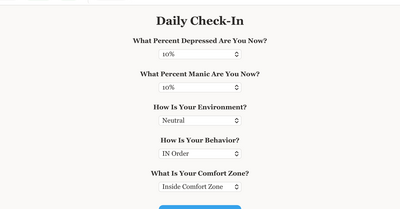
Daily Check-ins
A 30-second daily check-in captures mental state, environment, behavior, and tool usage. Over time, this builds the dataset that drives reports and pattern recognition.
Comfort Zone Tracking
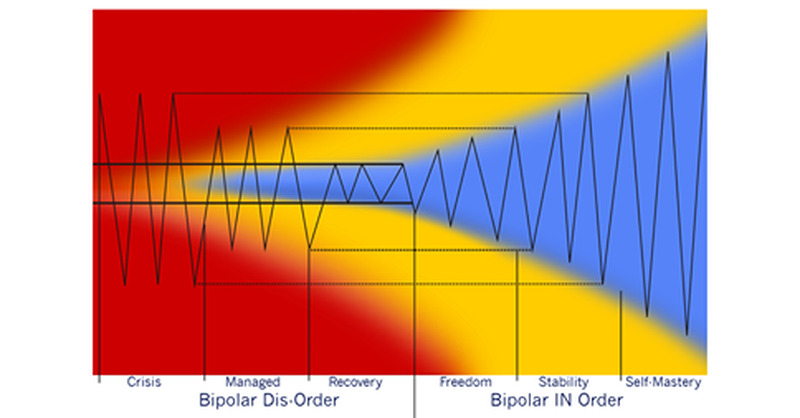
Each user defines personal functioning thresholds for their condition states. The app tracks when check-ins show them inside, slightly outside, or too far outside their comfort zone.
Graduated Response Plans
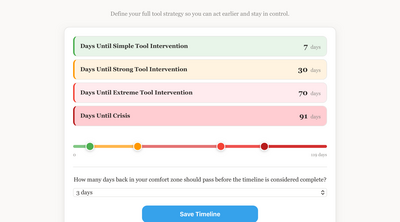
When check-in data shows a trend outside the comfort zone, the program walks the user through a stepped response — starting with awareness, progressing to stronger tools when needed.
AI Coaching
AI-assisted reflection that reinforces self-awareness and helps users recognize patterns. Explicitly scoped to coaching — not clinical advice.
Data That's Actually Useful
Tool Effectiveness Tracking
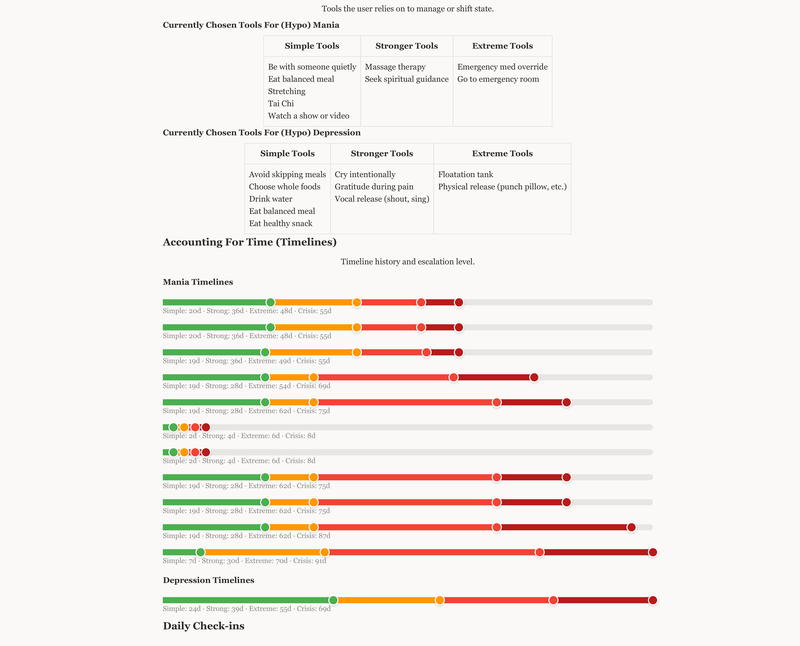
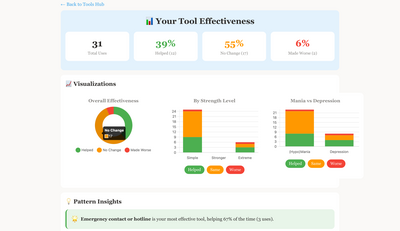
The program tracks which tools each client uses, how often they help, and in what context. You get visualizations and pattern insights — not just a list of coping strategies.
This is one of several reports your client can choose to share with you.
HIPAA-Compliant Architecture
All authentication events and PHI (protected health information) access are logged in a comprehensive audit trail. Data sharing access is tracked per-grantee. Admin impersonation is fully logged. The system supports data export for compliance requests.
HIPAA-compliant architecture: bcrypt password hashing, TOTP two-factor authentication, CSRF token rotation, PDO prepared statements, rate-limited login, Cloudflare Turnstile CAPTCHA. Config files stored outside the web root. Role-based access controls separate user, partner admin, and system admin capabilities. All authentication events and data access are audit-logged.
23 Years of Development

Minds IN Order has been in continuous development since 2003. What started as in-person workshops has been refined into a fully digital, standardized program. Studied at Tufts University. Reviewed by PCORI. Endorsed by researchers at Yale, UC Berkeley, Maastricht University, and the University of Barcelona.
In continuous use since 2003 — from in-person workshops to the current digital platform. Now scaling through clinical partnerships and institutional pilots.
Free for Therapists
Try It Yourself — No Cost, No Commitment
You get free access to the full program so you can see exactly what your clients will experience. Explore the lessons, check-ins, tools, and reports firsthand before recommending it to anyone.
When a client enrolls and invites you, you also get read-only access to the reports they choose to share — at no cost to you or your practice.
Get Started
Want a walkthrough first? Contact Tom Wootton